
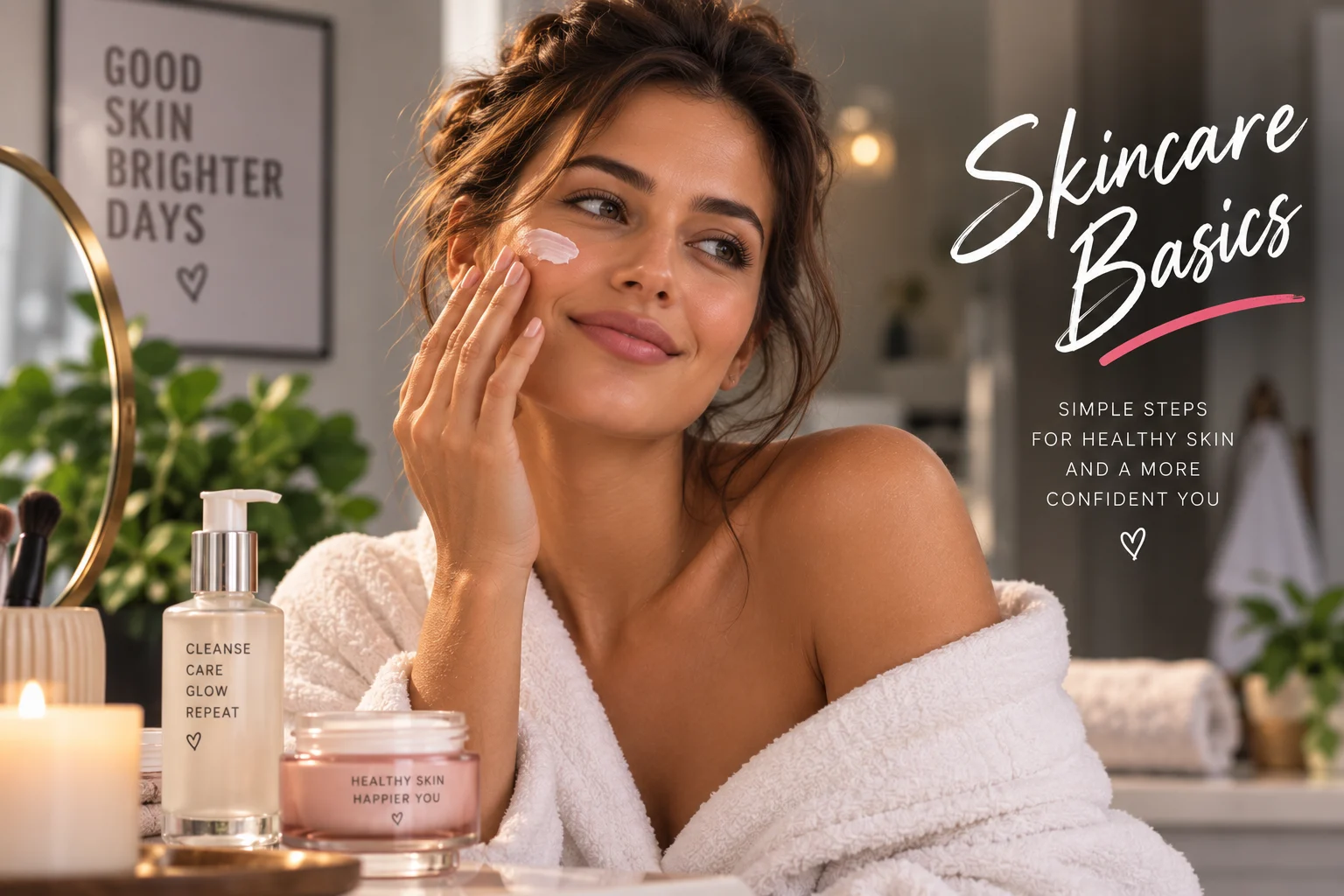
Skincare can become confusing quickly. New acids, serums and miracle ingredients appear constantly, but a good routine does not need twenty steps. For most people, consistency with a few basics matters more than chasing every trend.
Keep cleansing gentle
A cleanser should remove sweat, sunscreen, makeup and excess oil without leaving your skin feeling painfully tight. If your face feels stripped after washing, a gentler formula or less frequent cleansing may suit you better.
Moisturize even if your skin is oily
Oily skin can still become dehydrated. A lightweight moisturizer can support the skin barrier without feeling heavy. Drier skin may prefer richer creams, especially at night or in colder weather.
Use sunscreen consistently
Daily sun protection is one of the most useful long-term skincare habits. Broad-spectrum sunscreen helps reduce UV damage associated with premature visible aging and skin cancer risk. Apply it to exposed skin and reapply when needed, especially outdoors.
Add one active ingredient at a time
It is tempting to begin several products at once, but that makes irritation harder to trace. Introduce one new active slowly and give your skin time to respond. More tingling is not proof that a product is working better.
Do not over-exfoliate
Exfoliating acids and scrubs can make skin feel smooth, but using them too often can damage the skin barrier. Redness, burning, tightness and sudden sensitivity are signs that your routine may be doing too much.
Give products time
Skincare is usually measured in weeks, not days. Constantly switching products can prevent you from learning what actually works. Unless a product causes irritation, give a simple routine a fair trial before changing everything.
Treat breakouts gently
Picking and squeezing can increase inflammation and may lead to marks or scarring. Proven acne ingredients can help some people, but persistent or severe acne deserves professional care rather than endless experimentation.
Remember that lifestyle shows up on skin
Sleep, hydration, smoking, stress, diet and sun exposure can all influence how skin looks and feels. A serum cannot fully compensate for consistently poor recovery or heavy UV exposure.
Patch test when appropriate
If you have sensitive skin or are trying a strong active, test a small area first. This is especially useful with products that contain exfoliating acids, retinoids, fragrances or ingredients you have reacted to before.
Aim for healthy-looking skin, not perfection
Real skin has pores, texture and occasional blemishes. Filters and heavily edited images can create unrealistic expectations. A useful skincare routine should support comfort and confidence, not make you feel as though normal skin is a problem to solve.